
Think about a puppy for a second; it’s basically a tiny construction site. Every day, bones are lengthening, muscles are forming, and organs are developing at lightning speed. That’s why puppies aren’t just “small dogs”; they’re in a completely different biological phase. According to veterinary insights, puppies require diets specifically formulated for growth to avoid serious health issues like weak bones or developmental problems . Their bodies demand a constant supply of building materials; protein, fat, calcium, and energy; to support this rapid transformation.
Adult dogs, on the other hand, have already completed most of their physical development. Their nutritional needs shift from building new tissue to maintaining what they already have. It’s like the difference between constructing a house and simply keeping it in good condition. Adult dog food is therefore designed to support steady energy levels, immune function, and overall health rather than growth. Feeding a puppy adult food during this critical stage can lead to deficiencies that impact lifelong health, which is why veterinarians strongly emphasize life-stage-specific nutrition.
Metabolism and Energy Requirements
Puppies are basically little energy machines. Their metabolism runs faster than that of adult dogs, meaning they burn calories quickly and need more fuel to keep up. Research shows that puppy food often contains significantly higher calorie density; sometimes 25–30% more calories per cup; because of these intense energy demands . Imagine trying to power a race car with the fuel designed for a family sedan; it simply wouldn’t work efficiently.
Adult dogs don’t need that same energy boost. Their activity levels may still be high, but their bodies aren’t growing at the same pace. Too many calories for an adult dog can quickly lead to weight gain and even obesity. That’s why adult formulas are carefully balanced to provide enough energy without overloading the system. Understanding this metabolic difference is the key to choosing the right food at the right stage of life.
Key Differences In Ingredients And Calorie Density
Higher Calories in Puppy Food
One of the most noticeable differences between puppy and adult dog food lies in calorie density. Puppies need more energy not just for play, but for growth, brain development, and immune system support. This is why puppy food is richer and more concentrated in nutrients. It’s designed to deliver maximum nourishment in smaller portions, helping puppies meet their needs without overloading their still-developing digestive systems.
Adult dog food, in contrast, is more moderate in calories. Feeding a high-calorie puppy diet to an adult dog is like constantly overeating; it can lead to weight gain and health issues over time. Interestingly, puppies may require nearly double the caloric intake of adult dogs of the same size during peak growth phases . This dramatic difference highlights why switching foods at the right time is so important.
Ingredient Composition and Digestibility
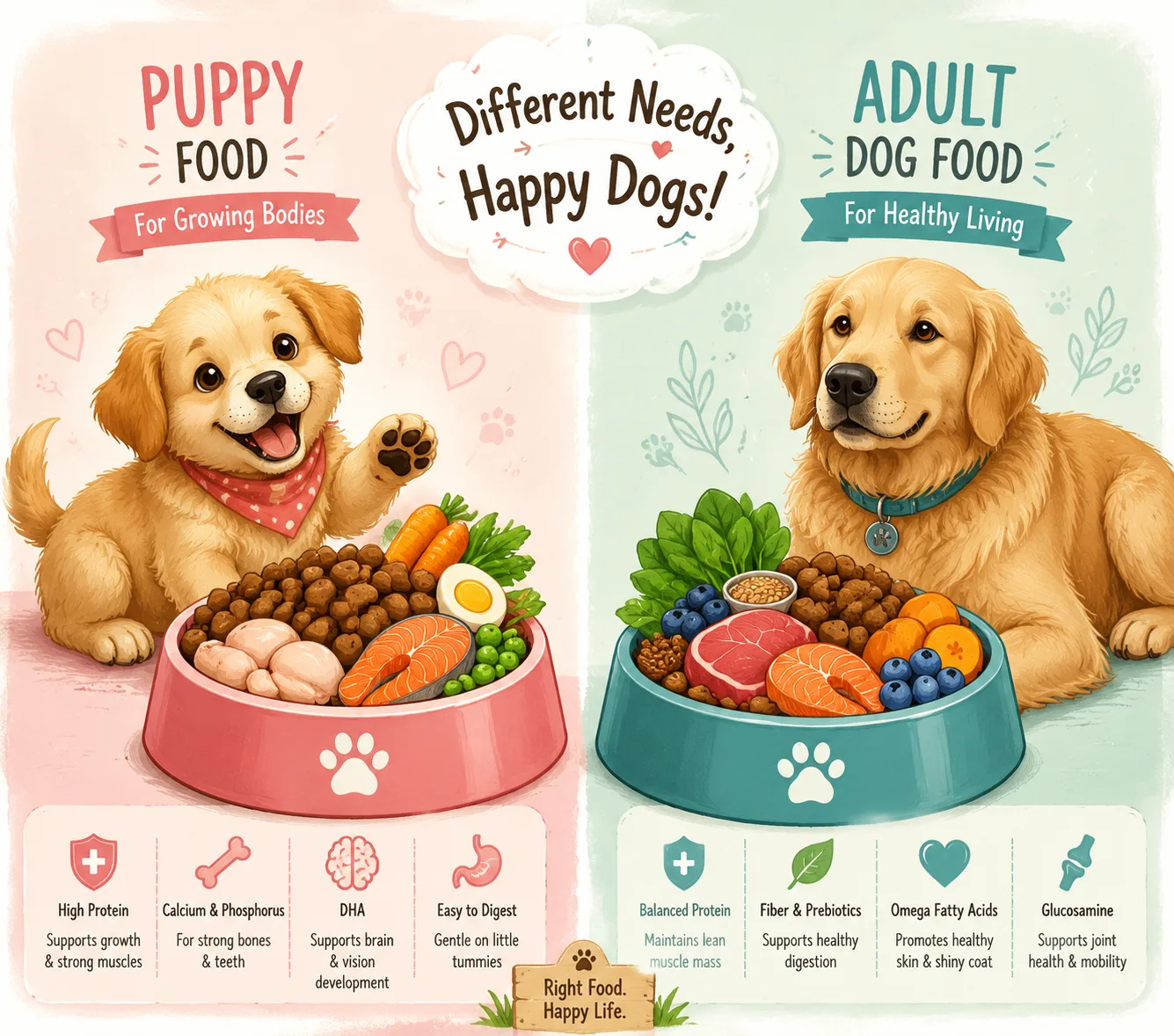
Another major difference lies in the ingredients themselves. Puppy food is formulated to be highly digestible, ensuring that young dogs can absorb nutrients efficiently. Their digestive systems are still developing, so they need food that’s easy to break down and utilize. Ingredients often include higher-quality proteins, essential fatty acids like DHA, and carefully balanced minerals to support bone growth.
Adult dog food, while still nutritious, is less focused on rapid absorption and more on long-term health. It may include more fiber to support digestion and maintain a healthy weight. Puppies also require higher levels of calcium and phosphorus for bone development, while adult dogs need these minerals in more controlled amounts to avoid health issues. These subtle but critical differences make it clear that not all dog food is created equal.
How Protein And Fat Levels Support Development
Role of Protein in Muscle and Organ Growth
Protein is the cornerstone of a puppy’s diet. It provides the amino acids needed to build muscles, organs, and tissues. Puppies require a higher percentage of calories from protein compared to adult dogs because their bodies are constantly growing and repairing themselves . Without enough protein, a puppy’s development can be compromised, leading to weak muscles and poor overall health.
Adult dogs still need protein, but not at the same elevated levels. Their bodies use protein primarily for maintenance rather than growth. Feeding too much protein to an adult dog isn’t necessarily harmful, but it’s not as essential as it is for puppies. The key difference lies in how the body uses protein at each life stage; growth versus maintenance.
Role of Fat in Brain and Energy Development
Fat often gets a bad reputation, but for puppies, it’s absolutely essential. Fat provides concentrated energy and supports the absorption of fat-soluble vitamins. It also plays a crucial role in brain development, particularly through omega-3 fatty acids like DHA. These nutrients are vital for cognitive function, vision, and nervous system development in young dogs.
Adult dogs still need fat, but in more controlled amounts. Excess fat in an adult dog’s diet can lead to obesity and related health problems. For puppies, however, fat is a powerhouse nutrient that fuels their rapid growth and high activity levels. Think of it as premium fuel for a high-performance engine; necessary during the early stages but excessive later on.
Portion Sizes And Feeding Frequency Compared
Puppy Feeding Schedule
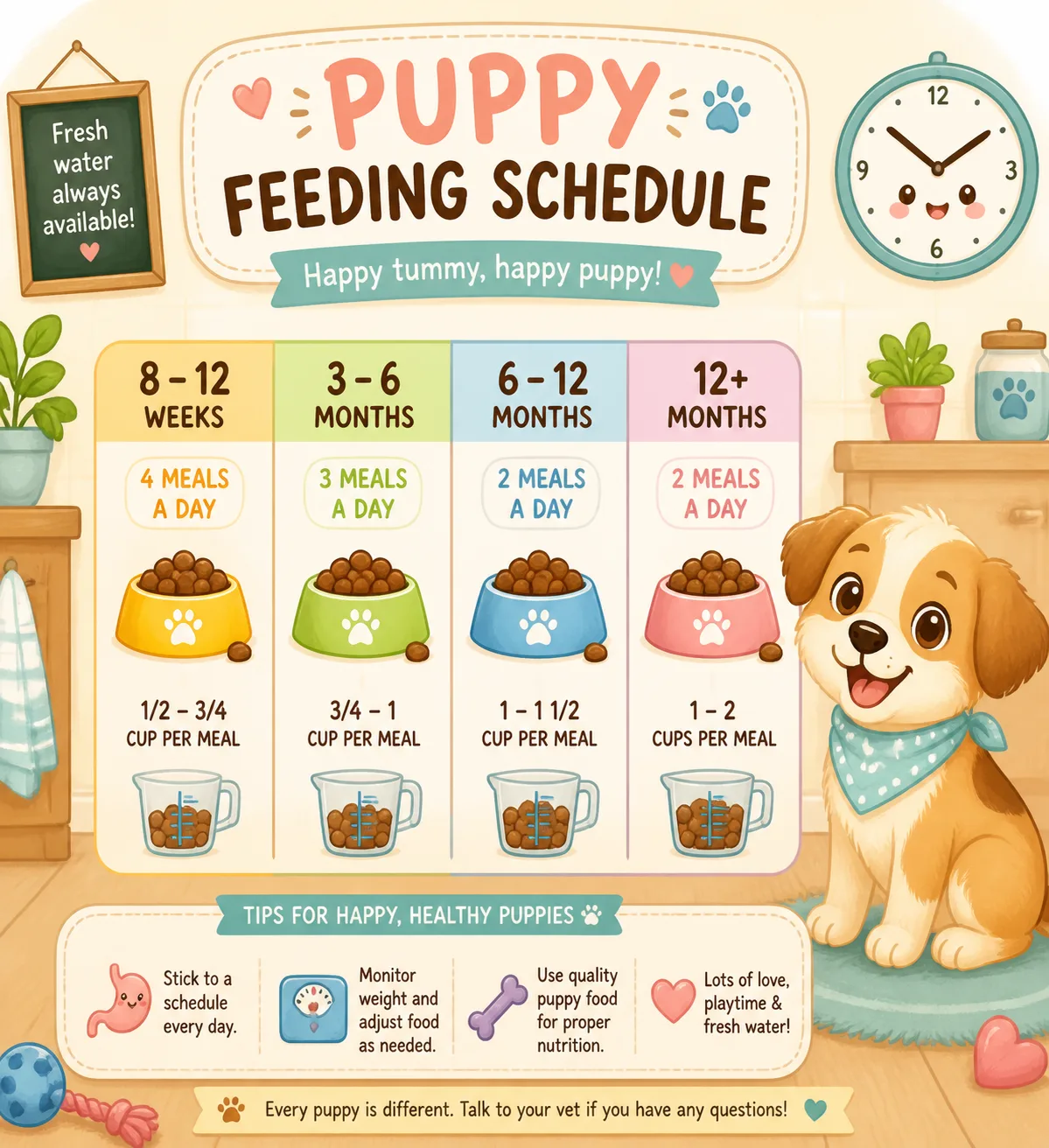
Feeding a puppy isn’t just about what you feed; it’s also about how often. Puppies typically require at least three meals a day to keep up with their fast metabolism and constant energy needs . Smaller, more frequent meals help maintain stable blood sugar levels and prevent overeating during any single feeding.
Portion sizes for puppies are carefully measured to support steady growth without causing excessive weight gain. Overfeeding can be just as harmful as underfeeding, leading to issues like obesity or skeletal problems. This is why many veterinarians recommend structured feeding schedules rather than free feeding. It’s all about balance; providing enough nutrients without overwhelming the system.
Adult Dog Feeding Routine
Adult dogs, in contrast, typically do well with one or two meals per day. Their metabolism is slower, and they don’t require the same constant energy supply as puppies. Feeding less frequently helps maintain a healthy weight and prevents unnecessary calorie intake.
Portion sizes for adult dogs are also more stable and predictable. Unlike puppies, whose needs change rapidly, adult dogs usually maintain consistent dietary requirements. This makes feeding routines simpler and easier to manage. However, it’s still important to monitor weight and adjust portions as needed to keep your dog in optimal condition.
When And How To Transition From Puppy To Adult Food
Ideal Age Based on Breed Size
So, when should you make the switch? The answer isn’t one-size-fits-all. Most dogs transition to adult food around 12 months of age, but this can vary depending on breed size. Smaller breeds tend to mature faster and may switch earlier, while large and giant breeds can take up to 18–24 months to reach adulthood.
The key indicator is growth rate. Once your puppy’s growth starts to slow down and stabilize, it’s usually time to consider transitioning. Consulting with a veterinarian can help you determine the best timing based on your dog’s specific needs.
Suggested Posts: How To Train Dog To Ring Bell To Go Outside Easily
Step-by-Step Transition Method
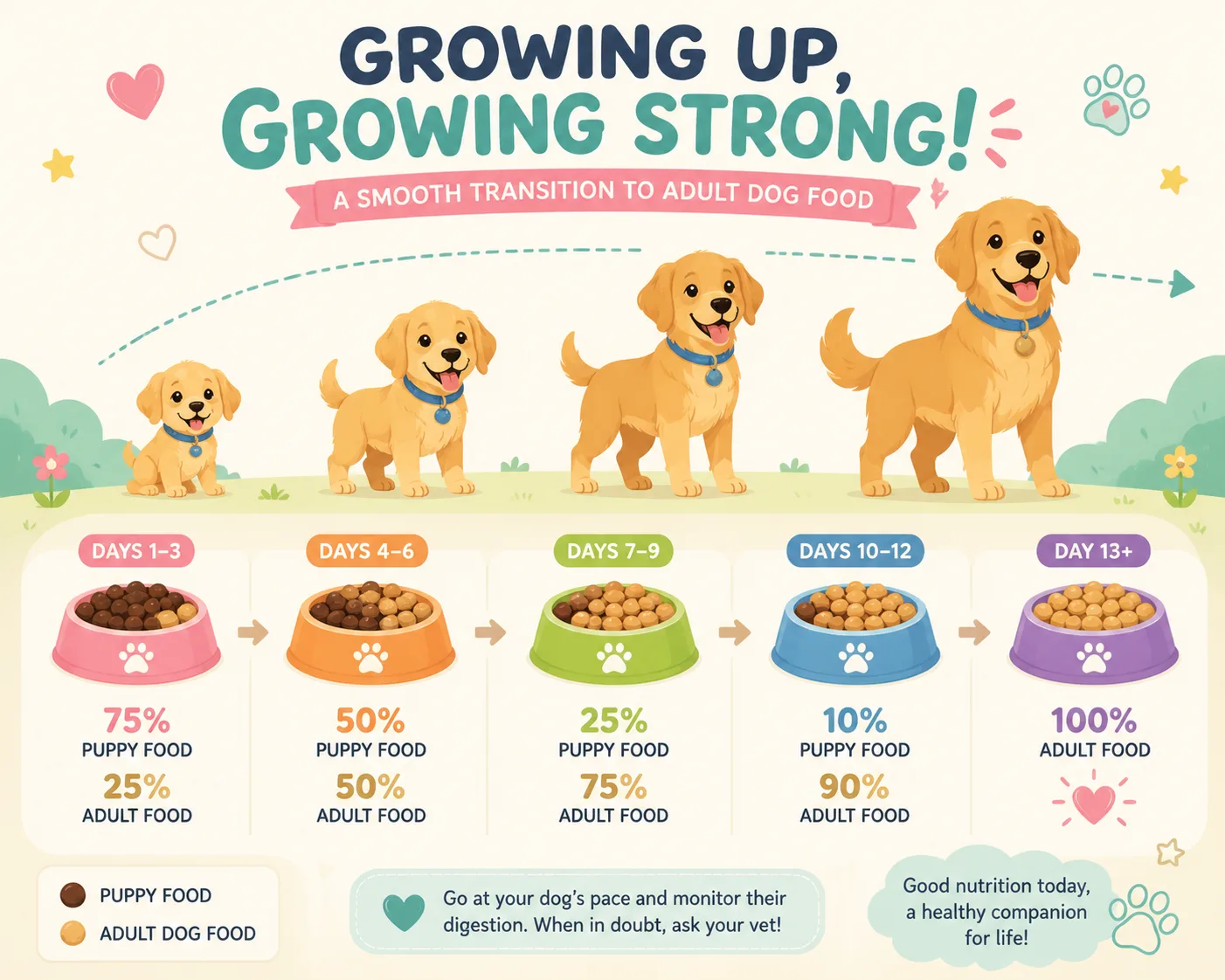
Switching foods isn’t something you should do overnight. A gradual transition over 7–10 days is recommended to prevent digestive upset. Start by mixing a small amount of adult food with the puppy food, then gradually increase the proportion of adult food each day.
This slow transition allows your dog’s digestive system to adapt to the new formula. Sudden changes can lead to issues like vomiting or diarrhea, which no pet owner wants to deal with. Patience is key here; taking the time to transition properly ensures a smoother experience for both you and your dog.
Risks Of Switching Too Early Or Too Late
Health Risks of Early Switching
Switching to adult food too early can have serious consequences. Puppies may not receive enough essential nutrients for proper growth, leading to issues like weak bones, poor muscle development, and compromised immune function. These problems can have long-term effects that are difficult to reverse.
Early switching essentially cuts off the supply of critical nutrients during a crucial developmental window. It’s like stopping construction halfway through a building project; the results are incomplete and unstable. That’s why it’s so important to stick with puppy food until your dog is truly ready.
Problems with Delayed Transition
On the flip side, delaying the switch can also cause problems. Continuing to feed high-calorie puppy food after growth has slowed can lead to weight gain and obesity. Excess weight puts strain on joints and increases the risk of conditions like diabetes and heart disease.
Finding the right balance is essential. Timing the transition correctly ensures that your dog receives the right nutrients at the right stage of life. It’s a delicate balance, but one that pays off in long-term health and well-being.
Reading Labels To Make Better Feeding Choices
Understanding Nutritional Labels
Dog food labels can feel overwhelming at first glance, but they’re actually packed with useful information. Look for statements indicating that the food meets established nutritional standards for a specific life stage. For example, foods labeled for “growth” are designed for puppies, while “maintenance” formulas are intended for adult dogs .
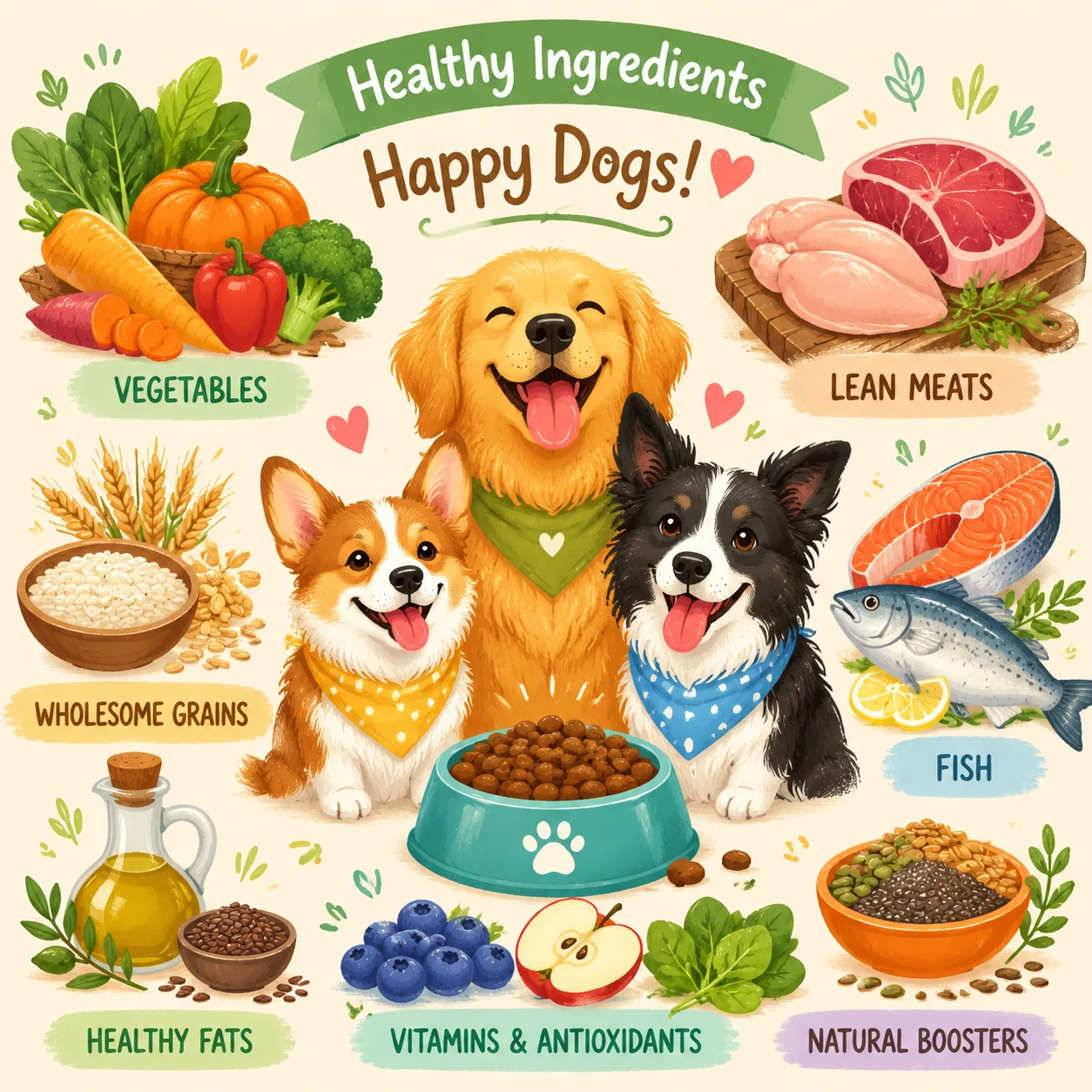
Pay attention to the ingredient list as well. High-quality protein sources should be listed near the top, along with essential nutrients like fats and vitamins. Avoid foods with excessive fillers or vague ingredient descriptions.
What to Look for in Quality Dog Food
When choosing dog food, focus on quality rather than marketing claims. Look for balanced formulas that provide the right mix of protein, fat, and carbohydrates for your dog’s life stage. Ingredients like DHA, calcium, and phosphorus are particularly important for puppies, while fiber and controlled calorie levels are key for adult dogs.
Ultimately, the goal is to provide a diet that supports your dog’s overall health and well-being. By understanding how to read labels, you can make informed decisions that benefit your pet in the long run.
Conclusion
The difference between puppy food and adult dog food goes far beyond simple labeling; it’s rooted in the biological needs of dogs at different stages of life. Puppies require nutrient-dense, high-energy diets to support rapid growth, while adult dogs need balanced nutrition for maintenance and long-term health. From protein and fat levels to feeding schedules and portion sizes, every aspect of their diet changes as they grow. Making the right choices at each stage ensures your dog develops properly and stays healthy throughout their life.
FAQs
1. Can puppies eat adult dog food occasionally?
Occasional intake may not cause immediate harm, but it doesn’t provide the nutrients needed for proper growth. Regular feeding of adult food can lead to deficiencies.
2. Is puppy food safe for adult dogs?
Yes, but it’s not ideal long-term. The higher calorie content can lead to weight gain and obesity in adult dogs.
3. How do I know if my puppy is getting enough food?
Monitor their growth, energy levels, and body condition. Regular vet checkups can help ensure proper nutrition.
4. What happens if I switch food too quickly?
Sudden changes can cause digestive issues like diarrhea or vomiting. Always transition gradually.
5. Are “all life stages” dog foods a good option?
They can work for some dogs, but they may not be ideal for large-breed puppies or less active adult dogs. Always check nutritional balance.

Darian Voss is a 29-year-old American content writer based in Boise, Idaho, known for his clear, research-driven approach to digital publishing. With several years of experience crafting engaging articles across lifestyle and pet-focused niches, Darian has built a reputation for delivering trustworthy, reader-friendly content. As a regular contributor to dogcatbirdfish.com, he specializes in simplifying complex topics into practical, easy-to-follow guides that resonate with everyday readers. His writing reflects both analytical thinking and a genuine passion for helping audiences make informed decisions.