
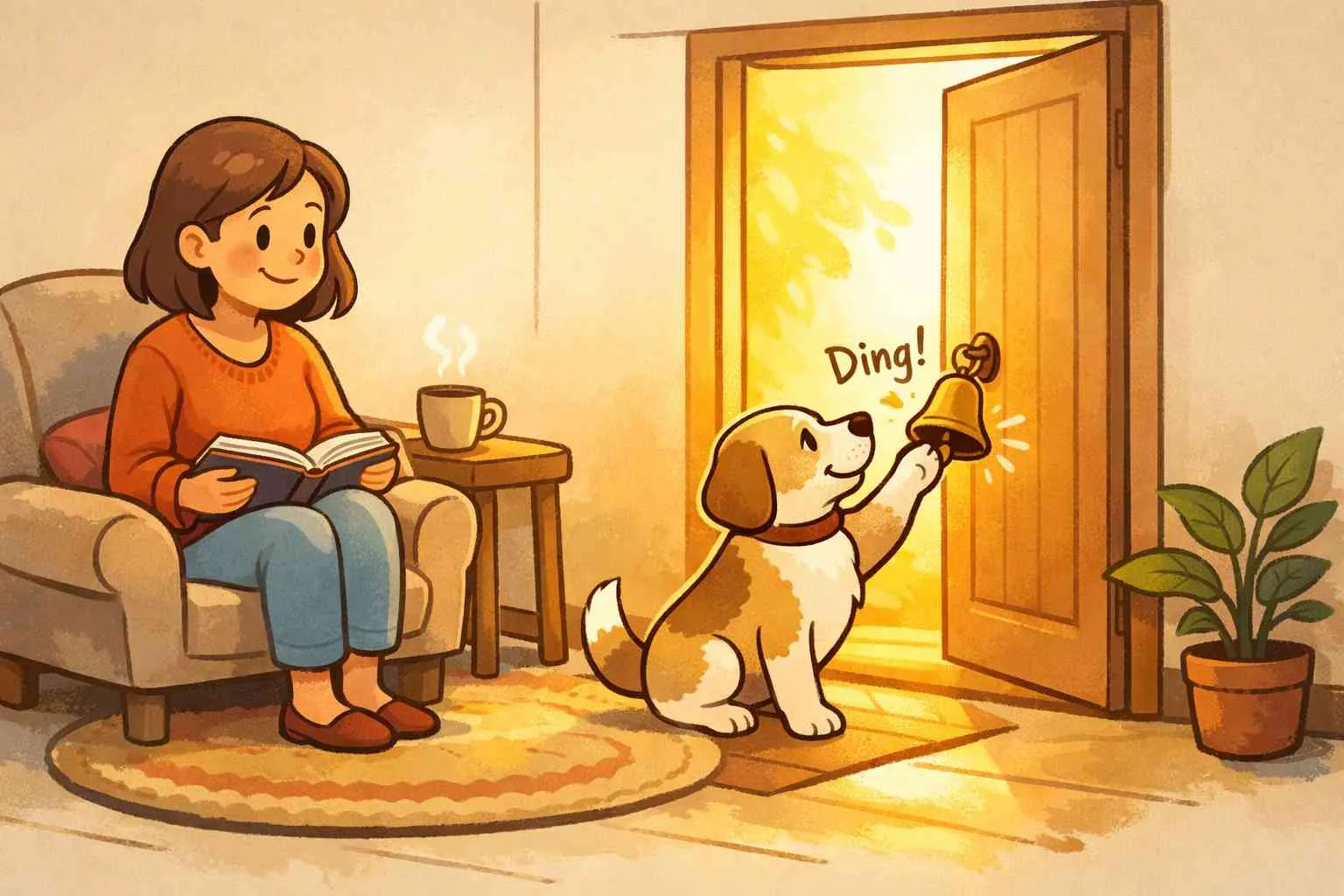
If you’ve ever watched your dog pace by the door, scratch the floor, or stare at you with those “I need something” eyes, you already know one thing; dogs are constantly trying to communicate. The problem? Humans aren’t always great at understanding those signals. That’s exactly where bell training steps in and changes the game.
Dogs thrive on patterns and associations. They don’t naturally understand doors, locks, or even the idea of “going outside” as a scheduled event. What they do understand is cause and effect. When a behavior leads to a predictable outcome, they latch onto it quickly. This is why a simple tool like a bell becomes so powerful; it creates a clear, repeatable link between action and reward.
Think of it like giving your dog a “button” to talk. Instead of guessing what your dog wants or dealing with accidents caused by missed signals, you’re giving them a direct way to tell you, “Hey, I need to go out.” That clarity reduces frustration on both sides. And once that communication bridge is built, everything from potty training to daily routines becomes smoother.
Why a Bell Creates Clear, Consistent Signals
Let’s be honest; dogs scratching doors or whining can mean a dozen different things. Maybe they need the bathroom, or maybe they just saw a bird. The beauty of a bell is that it eliminates that ambiguity. It becomes a specific, intentional signal tied to one outcome.
Consistency is the secret sauce here. When your dog rings the bell and immediately gets taken outside, their brain starts forming a strong connection. Over time, that connection becomes automatic. The bell isn’t just noise anymore; it’s communication.
What makes bell training even more effective is that it’s active communication. Instead of passive behaviors like whining, your dog is choosing to perform an action. That sense of control actually speeds up learning. It’s like the difference between guessing the answer and pressing a buzzer; you feel more engaged and confident when you know what works.
Setting Up the Right Spot for the Bell
Choosing the Perfect Location Near the Door
Placement matters more than most people realize. If the bell isn’t in the right spot, your dog might struggle to connect it with going outside. The ideal location is right at your dog’s nose or paw level, hanging on or near the door you use most often.
You want the bell to feel like part of the “exit ritual.” Every time your dog goes outside, they should pass by it. This repetition builds familiarity and helps them associate the bell with the act of leaving.
Avoid placing it too high or too far from the door. If your dog has to jump, stretch, or think too hard about reaching it, you’re adding unnecessary friction. Training works best when the behavior is easy and natural to perform.
Types of Bells You Can Use
Not all bells are created equal, but you don’t need anything fancy. The goal is clarity and consistency, not aesthetics.
Here’s a quick comparison:
| Bell Type | Pros | Cons |
|---|---|---|
| Hanging bells | Easy to install, adjustable height | Can swing too much |
| Mounted bells | Stable, consistent sound | Less flexible placement |
| Wireless buttons | Modern, customizable sound | Requires batteries |
Hanging bells are the most popular choice because they’re simple and effective. The key is choosing a bell with a clear, distinct sound; something your dog can easily recognize.
Teaching the First Touch Without Confusion
Introducing the Bell Step-by-Step
Here’s where the real magic begins. The goal isn’t to teach your dog to “ring a bell” right away; it’s to teach them to interact with it.
Start by holding the bell in your hand. Encourage your dog to sniff or touch it. The moment they make contact; whether it’s a nose bump or a paw tap; reward them immediately. This creates the first association: touching the bell equals something good.
Once your dog is consistently touching the bell in your hand, hang it in its proper spot. Repeat the same process. Each successful touch should lead to a reward and, ideally, a trip outside.
Using Positive Reinforcement Correctly
Timing is everything here. If you reward too late, your dog won’t understand what they did right. The reward needs to come within seconds of the bell touch.
Use high-value treats at the beginning. Think of it like teaching a new skill; you want to make it exciting and worth their effort. Over time, you can reduce treats and rely more on the reward of going outside.
Consistency is key. Every bell touch should lead to the same outcome. If sometimes it works and sometimes it doesn’t, your dog will get confused; and confusion slows progress more than anything else.
Turning Random Touches into a Clear Signal
Shaping Behavior Through Repetition
At first, your dog might ring the bell randomly. That’s normal. They’re experimenting, trying to figure out what works. Your job is to shape those random actions into a purposeful behavior.
Every time your dog rings the bell and you take them outside, you’re reinforcing the idea. Over time, the randomness fades, and the behavior becomes intentional.
Think of it like sculpting. You’re not creating something from scratch; you’re refining what’s already there. Each repetition chips away at confusion and builds clarity.
Timing Rewards for Better Results
Reward timing can make or break this stage. If your dog rings the bell and you wait too long to respond, the connection weakens. Ideally, you should respond immediately.
Even if you suspect your dog doesn’t need to go, take them outside anyway during training. This reinforces the rule: bell equals outside. You can fine-tune the behavior later, but in the early stages, clarity matters more than efficiency.
Building Consistency with Daily Practice
Creating a Routine Your Dog Understands
Dogs love routines. They find comfort in predictability. Use that to your advantage by pairing bell training with regular potty breaks; morning, after meals, and before bed.
Each time you head outside, gently guide your dog to ring the bell first. Over time, they’ll start doing it on their own. The routine becomes second nature, like brushing your teeth before bed.
Consistency across all family members is crucial. If one person ignores the bell while another responds, your dog will get mixed signals. Everyone needs to follow the same rules.
How Long Training Usually Takes
Most dogs pick up the basics within a few days to a couple of weeks. Full consistency might take a bit longer, depending on the dog’s age, personality, and previous training.
Puppies often learn faster because they’re already in a learning phase. Older dogs might take a little more patience, but they can absolutely master it too.
The key is persistence. Training isn’t about perfection; it’s about progress.
Common Mistakes That Slow Down Progress
Inconsistent Rewards and Timing
One of the biggest mistakes is inconsistency. If your dog rings the bell and sometimes gets ignored, they’ll start to doubt the behavior. That doubt leads to hesitation, and hesitation slows learning.
Always respond to the bell during training, even if it’s inconvenient. You’re building a habit, and habits require repetition.
Overusing the Bell Cue
Some owners accidentally teach their dog to ring the bell for everything; playtime, attention, or boredom. This usually happens when the bell is over-rewarded or used inconsistently.
To avoid this, keep the meaning of the bell specific and clear. It should always lead to going outside, nothing else.
Troubleshooting Problems During Training
What If Your Dog Ignores the Bell?
If your dog isn’t engaging with the bell, go back a step. Reintroduce it in your hand and rebuild the association with treats. Make it fun and low-pressure.
Sometimes, dogs just need a little more encouragement; or a better reward.
What If Your Dog Rings Too Much?
This is actually a sign of success; your dog understands the system. Now it’s about refining it. If your dog rings the bell but doesn’t go to the bathroom outside, calmly bring them back in.
Over time, they’ll learn that the bell isn’t for entertainment; it’s for a specific purpose.
Benefits of Bell Training Beyond Potty Time
Strengthening Communication and Trust
Bell training isn’t just about avoiding accidents; it’s about building a stronger relationship with your dog. When your dog realizes they can communicate with you and be understood, their confidence grows.
It also reduces frustration. No more guessing games, no more missed signals. Just clear, simple communication that works.
And once your dog learns one communication tool, they’re more open to learning others. It’s like unlocking a new level in your relationship.
Conclusion
Training your dog to ring a bell to go outside might seem like a small trick, but it’s actually a powerful communication breakthrough. It transforms confusion into clarity and replaces guesswork with certainty. By focusing on consistency, timing, and patience, you’re not just teaching a behavior; you’re building a system your dog can rely on.
Stick with it, stay consistent, and remember: every ring of that bell is your dog saying, “I trust you to understand me.”
FAQs
1. Can older dogs learn bell training?
Absolutely. Age doesn’t limit learning; consistency and motivation matter more.
2. How long does bell training usually take?
Most dogs learn within 1–3 weeks, though consistency improves over time.
3. What if my dog is scared of the bell sound?
Start with a softer bell or muffle the sound slightly, then gradually increase volume.
4. Should I use treats forever?
No. Treats are mainly for early training. Eventually, going outside becomes the reward.
5. Can bell training stop accidents completely?
When done consistently, it significantly reduces and often eliminates indoor accidents.

Alaric Boone is a 27-year-old American writer based in Asheville, North Carolina, with a strong focus on creative yet informative digital content. His writing style combines a thoughtful narrative tone with well-researched insights, making his articles both engaging and credible. As a contributor to dogcatbirdfish.com, Alaric explores topics related to pets and everyday living, aiming to provide practical advice grounded in real knowledge. His dedication to authenticity and clarity helps establish trust with readers looking for dependable and relatable content.