

Dogs are fascinating creatures, full of quirky behaviors that often leave us scratching our heads. One of the most common yet puzzling habits is bed scratching before lying down. If you’ve ever watched your furry friend paw at their blanket or bed in circles, you might have wondered: what’s going on in their mind? This seemingly simple action is actually steeped in instincts, comfort-seeking behavior, and communication methods that trace back to their wild ancestors. Let’s unravel the layers behind this peculiar habit.
The Ancestral Instinct Behind Scratching
Wild Canine Roots
Before dogs were domesticated, their ancestors; wolves and wild canines; had to survive in nature’s unpredictable environment. Scratching at the ground or bedding was a vital behavior for survival. In the wild, wolves often paw at leaves, grass, or snow to create a comfortable, safe spot to rest. This action served multiple purposes: it helped to clear debris, uncover softer layers of earth, and create a slight depression that offered protection from wind or predators. Modern dogs, even in the safety of our homes, carry this ingrained instinct. When your dog circles and scratches their bed, they are subconsciously performing a ritual inherited from thousands of years ago, connecting them to their wild roots.
Creating a Safe Sleeping Spot
The instinct to “prepare” a sleeping area goes beyond comfort. In the wild, animals that didn’t make their sleeping area secure faced higher risks. By scratching and pawing at the ground or bedding, dogs create a slight nest-like depression, ensuring their body feels more secure and sheltered. It’s not merely a quirk; it’s a survival mechanism. This same drive persists in domestic dogs, who may scratch their beds before lying down to feel safe and in control of their immediate environment.

Comfort and Temperature Regulation
Softening and Arranging Bedding
Dogs are surprisingly particular about the surfaces they sleep on. Scratching is often a way to rearrange bedding to achieve maximum comfort. By moving blankets or fluffing cushions with their paws, dogs mimic the natural behavior of rearranging leaves or grass in the wild to achieve a soft, supportive resting spot. This habit helps them contour their bed to the shape of their body, ensuring they are not only comfortable but also ready for restorative sleep.
Cooling or Warming the Sleeping Area
Temperature regulation is another practical reason dogs scratch before lying down. On warmer days, scratching can expose cooler surfaces underneath blankets or rearrange the material to allow airflow. Conversely, in colder weather, scratching and fluffing bedding traps heat closer to their body, providing insulation. This small but purposeful action is an intuitive method dogs use to control their immediate environment for optimal comfort.
Scent Marking and Territory
Scent Glands in Paws
Dogs have scent glands in their paw pads, and scratching or kneading their beds releases these natural scents. This behavior communicates a message: “This is my spot.” Even in a household with other pets, this subtle scent-marking establishes a sense of ownership. It’s a form of nonverbal communication deeply embedded in their instincts, ensuring they feel secure in their personal territory.
Communicating Ownership to Others
Beyond personal comfort, scent-marking has social implications. In multi-dog households, a scratched and marked bed can signal hierarchy and boundaries without a single bark or growl. Dogs are territorial creatures by nature, and this behavior ensures that their space is acknowledged and respected. Even if no other animal is present, the act of marking reinforces a sense of security and identity for the dog.

Habit or Behavioral Routine
Learned Comfort Rituals
For many dogs, bed scratching is part of a learned routine. From puppyhood, they observe and instinctively practice this behavior. Over time, it becomes a soothing ritual; a way to wind down before sleep. Much like humans fluff pillows or adjust blankets, dogs perform their pre-sleep routine for reassurance and relaxation.
When Scratching Becomes Repetitive
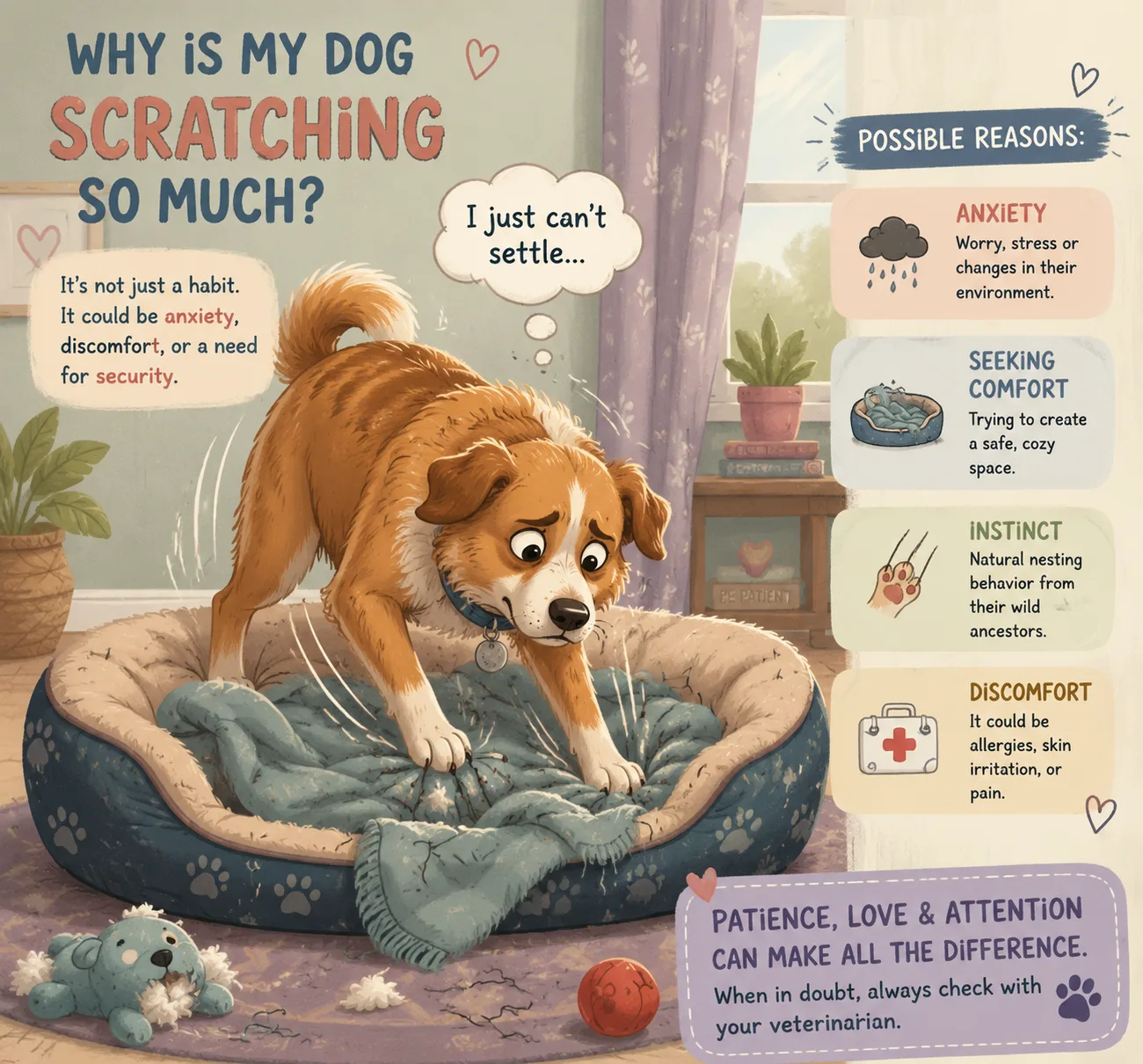
While most pre-sleep scratching is normal, some dogs may develop a habit of excessive pawing that goes beyond comfort or instinct. Repetitive behavior could be a sign of anxiety, stress, or boredom. Observing patterns in frequency and duration can help pet owners discern between normal habits and problematic behavior requiring attention.
Signs the Behavior Might Indicate Anxiety
Excessive Scratching
Excessive scratching; beyond preparing a bed; can signal emotional distress. Dogs may paw at their bedding frantically, repeatedly, or even damage it in the process. Such intensity can point to underlying anxiety issues, often triggered by environmental changes, separation, or overstimulation.
Other Behavioral Indicators
If bed scratching accompanies other behaviors; such as whining, pacing, destructive chewing, or restlessness; it’s worth considering a behavioral or medical evaluation. Anxiety manifests in multiple ways, and scratching is often just one symptom among many. Recognizing these patterns early helps owners intervene effectively and provide comfort to their pets.
Addressing Discomfort or Health Issues
Allergies and Skin Irritation
Sometimes scratching is not about instinct or habit but physical discomfort. Allergies, dermatitis, or irritation can prompt dogs to scratch repeatedly. Bed scratching might be an attempt to relieve itchiness or discomfort. Observing the condition of the skin, presence of redness, or hair loss around paws can provide clues for a veterinarian’s evaluation.
Joint Pain or Mobility Concerns
Older dogs or those with arthritis may scratch or circle more vigorously as they adjust their bed to reduce pressure on sore joints. This adjustment can help alleviate discomfort and create a supportive sleeping area that accommodates their condition. Ensuring orthopedic beds and soft bedding can minimize this issue significantly.
Tips for Managing Bed Scratching Indoors
Choosing the Right Bedding
Investing in high-quality, supportive beds helps minimize excessive scratching. Beds with orthopedic foam, memory foam layers, or thicker padding encourage dogs to settle quickly without needing to rearrange the surface excessively. Durable materials that withstand scratching also prevent damage to household items.
Providing Alternative Comfort Zones
If your dog scratches due to instinct or boredom, providing additional comfort zones; like padded mats, blankets, or even outdoor lounging spots; can reduce indoor scratching intensity. Rotating these areas keeps the environment engaging and satisfying for your dog’s natural behaviors.
Training and Positive Reinforcement
Gentle redirection and positive reinforcement can help moderate scratching behaviors. Encourage settling on a bed with calm praise, treats, or toys. Avoid punishment, which can increase anxiety and worsen repetitive scratching. Consistency in training paired with enriching activities ensures mental stimulation and emotional security.

Comparing Normal vs. Concerning Behavior
Frequency and Intensity Observations
A normal scratching ritual usually lasts a few seconds to a minute and is followed by calm resting. Concerning behavior involves repeated, intense scratching that disrupts sleep or causes injury. Monitoring these behaviors provides insight into whether intervention is necessary.
Explore Related: Key Differences Between Puppy Food And Dog Food
When to Consult a Veterinarian
Consult a veterinarian if scratching is accompanied by hair loss, bleeding, skin irritation, or persistent anxiety. A vet can rule out allergies, dermatological conditions, or joint issues and recommend targeted strategies to reduce the behavior safely.
Conclusion
Scratching before lying down is a multifaceted behavior rooted in instinct, comfort, and communication. From their wild ancestry to their present-day domestic life, dogs continue to rely on this habit for safety, temperature regulation, and emotional security. While generally harmless, excessive or disruptive scratching can indicate anxiety or physical discomfort. Understanding the reasons behind your dog’s bed-scratching allows you to provide comfort, security, and the right environment to satisfy both their instincts and your household harmony.

Keaton Mireles, a 34-year-old American blogger from San Antonio, Texas, brings a well-rounded background in content strategy and online publishing. His work is rooted in real-world experience, blending storytelling with actionable insights, particularly in pet care and lifestyle niches. At dogcatbirdfish.com, Keaton focuses on creating authoritative content that balances depth with accessibility, helping readers navigate common challenges with confidence. His consistent attention to detail and commitment to accuracy have made him a trusted voice among readers seeking reliable information.