
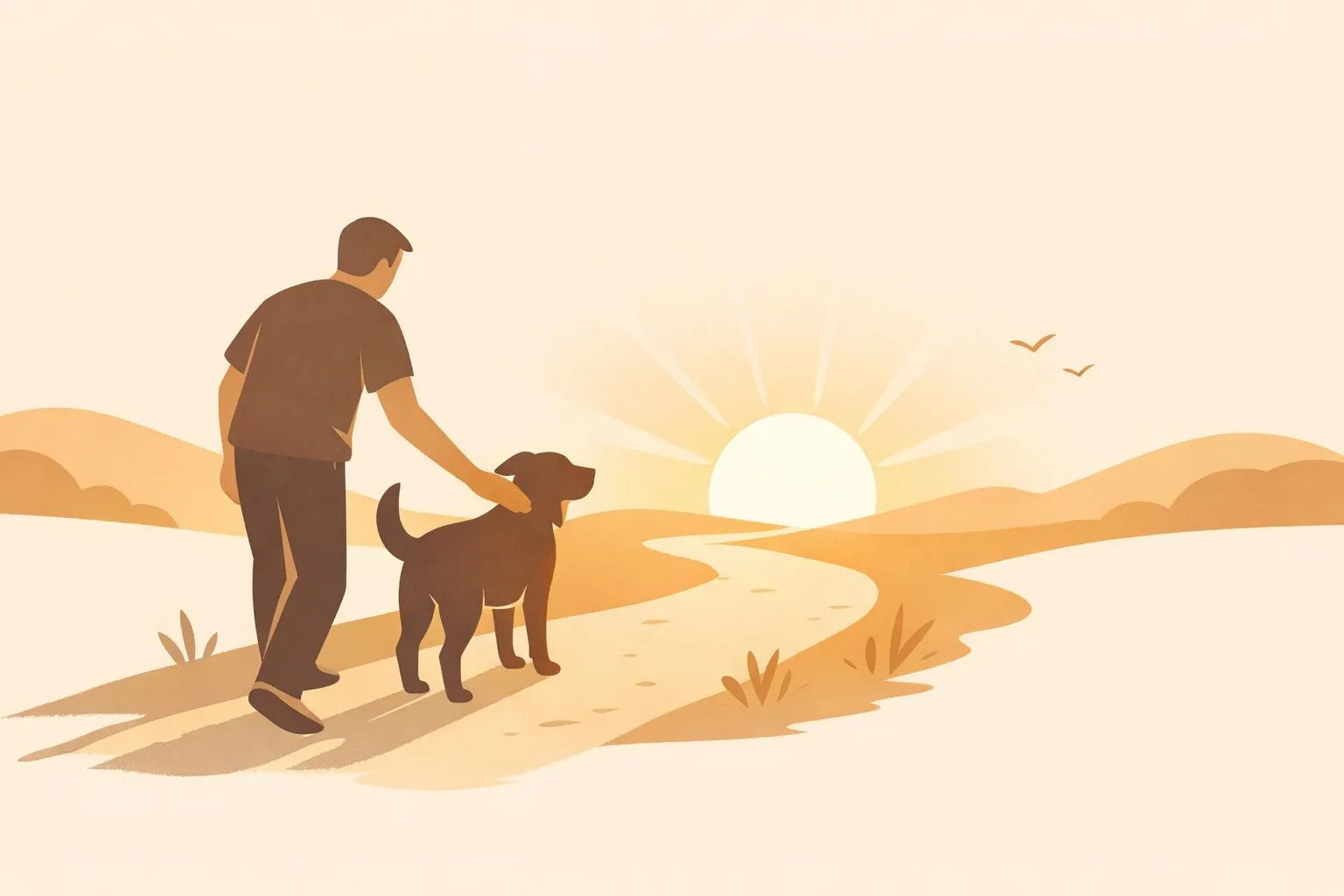
Few things confuse dog owners faster than this moment: you clip on the leash, open the door, and your dog suddenly becomes a statue. Yesterday they loved walks. Today they plant their paws like anchors in concrete. It feels personal, frustrating, and sometimes embarrassing when neighbors watch the standoff. But here is the truth most owners need to hear first: dogs rarely refuse to walk “for no reason.” They are almost always communicating discomfort, fear, stress, pain, confusion, or conflicting motivation.
According to guidance from the American Kennel Club, anxious dogs may freeze, sit, or lie down during walks because everyday triggers such as traffic, people, bikes, other dogs, or noise feel overwhelming. Forced exposure can worsen fear rather than solve it. Recent veterinary-reviewed sources also note that if a dog suddenly refuses to walk, pain, weakness, injury, or illness should be considered quickly.
Think of refusal like a dashboard warning light in a car. You can tape over the light, but the issue remains. Your job is not to overpower the dog. Your job is to investigate the message and rebuild trust. Once you understand the “why,” progress becomes much easier. In this guide, we’ll break down the real reasons dogs stop walking, what to do in the moment, how to motivate movement without force, and how to make walks enjoyable again.
Why Dogs Suddenly Stop Walking
A dog that stops walking is often responding to something that changed. Sometimes the change is obvious, like fireworks or a slippery sidewalk. Other times it is subtle, like sore joints, a negative memory, or overstimulation from too many stressful outings in a row. Dogs live in a world of sensation, and they notice details we miss. What seems like a normal street to you might feel like chaos to them.
One of the most common hidden reasons is pain. Paw pad burns from hot pavement, cracked nails, burrs between toes, muscle strains, arthritis, dental pain, or spinal discomfort can all make movement unpleasant. Dogs often hide pain well, which means refusal may be one of the first signs owners notice. If your dog hesitates on pavement but walks better on grass, that clue matters.
Fear is another major cause. A loud truck, aggressive off-leash dog, thunderstorm, slippery stairs, or being startled on a previous walk can create lasting associations. Dogs do not need repeated trauma for this to happen. One scary event can be enough to make a route feel unsafe. Some dogs also experience “trigger stacking,” where several small stressors pile up until they freeze.
Weather matters too. Heat can drain energy quickly, especially in flat-faced breeds, seniors, and overweight dogs. Cold rain, wind, or rough surfaces can be equally unpleasant. If your dog refuses only under certain environmental conditions, pay attention. Patterns are clues, and clues lead to solutions.
Is It Really Stubbornness?
Owners often label a dog as stubborn when the dog resists movement, chooses a different direction, or stops repeatedly. Sometimes dogs absolutely have preferences and can learn that stopping gets results. But even then, behavior still has a reason. Calling it stubbornness too early can blind you to the real issue.
Imagine someone asks you to walk barefoot across hot gravel while sirens blare nearby. If you refuse, are you stubborn; or sensible? Dogs make decisions based on comfort, safety, reinforcement history, and emotion. If they learned that pulling home ends stress, they may choose home. If sniffing is more rewarding than marching beside you, they may choose to stop and sniff.
Breed traits also influence behavior. Sighthounds may prefer bursts of activity and rest. Scent hounds naturally slow down to investigate odors. Guardian breeds can pause to scan surroundings. Tiny dogs may struggle with long distances or fast human pacing. Seniors may need slower starts because stiff joints warm up gradually.
So yes, some dogs test boundaries. But many so-called stubborn dogs are simply misunderstood communicators. Replace the word stubborn with the question, “What is my dog trying to tell me?” That single shift changes your training approach and usually improves results faster than frustration ever will.
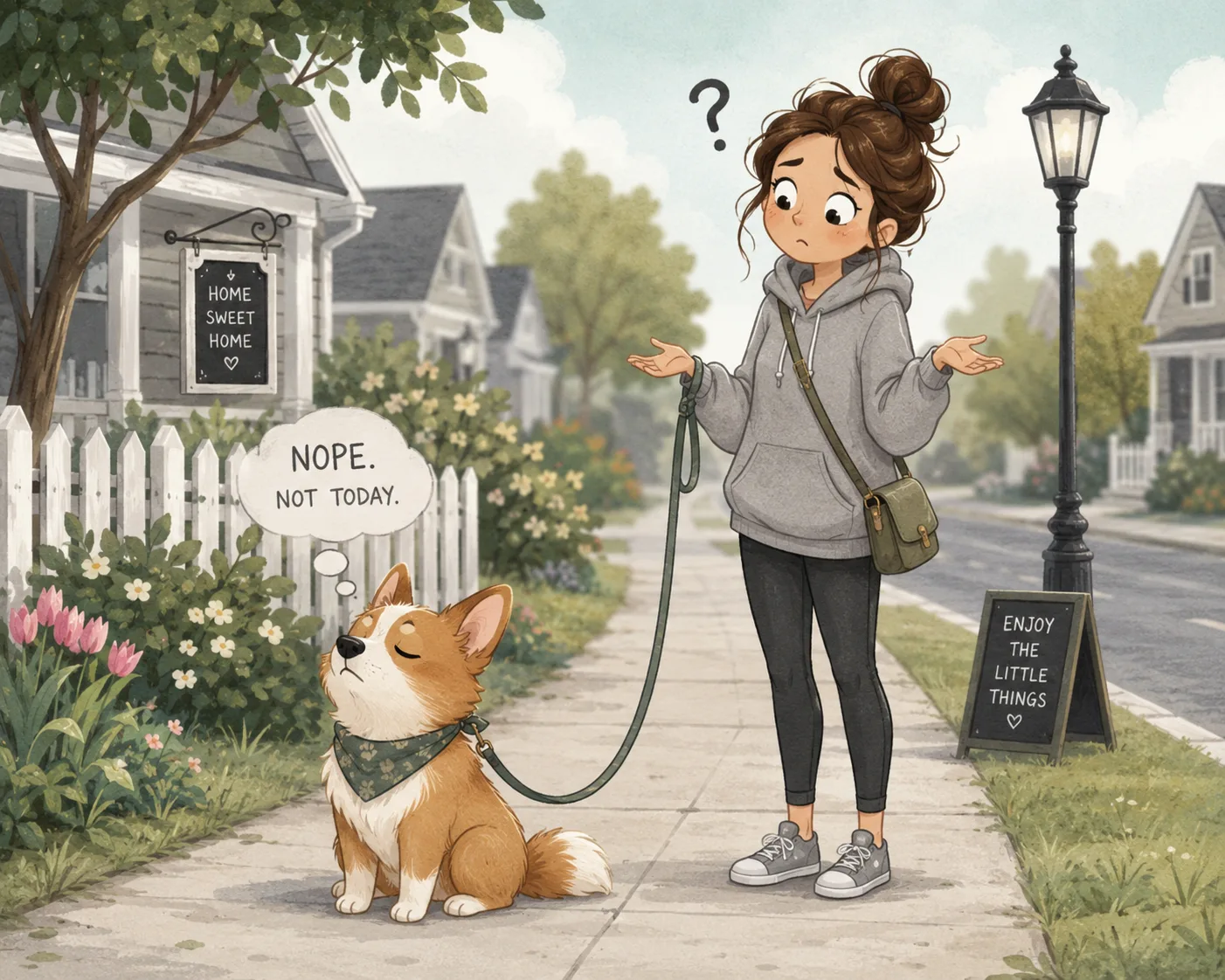
What To Do In The Moment When Your Dog Freezes
When your dog stops walking, the worst move is often the most common one: tightening the leash and dragging forward. That can increase panic, damage trust, and create stronger negative associations with walks. Instead, think calm, curious, and strategic.
First, stop moving yourself. Loosen the leash slightly and scan the environment. Is a truck idling nearby? Another dog approaching? Construction noise? Hot pavement? If you identify a trigger, create distance rather than demanding bravery. Sometimes just stepping behind a parked car or turning down a quieter street changes everything.
Next, invite movement. Use a cheerful voice, crouch sideways instead of looming, pat your leg, or take a few playful backward steps. Many dogs respond better to motion than commands. Tossing a treat a few feet behind or beside them can also reset their body. If they move one step, praise warmly. One step is progress.
If your dog shows signs of fear; tail tucked, trembling, whale eye, crouched posture; end the mission and go home calmly if possible. A short successful retreat beats a long traumatic struggle. If the freeze is paired with limping, panting, yelping, or sudden weakness, stop the walk and seek veterinary guidance.
Think of it like helping a friend through stage fright. You don’t shove them onto the stage. You lower the pressure and help them feel safe enough to take the next step.
Techniques To Encourage Movement Without Force
Positive motivation works better than force because it changes how your dog feels, not just what they do. Movement becomes something good, not something imposed. That emotional shift is where lasting improvement lives.
Start with high-value rewards. Regular kibble may be boring outdoors where distractions compete hard. Try tiny bits of chicken, cheese, or favorite treats. Present a treat near the nose, then move it one step forward. Mark and reward movement instantly. Repeat in short bursts. If food fails completely, stress may be too high or the reward too weak.
Use games. Dogs love patterns because patterns feel predictable. Try the “1-2-3 Walk” game: say one-two-three while stepping, then reward on three. Soon the rhythm itself can motivate motion. Another option is tossing treats ahead like breadcrumbs for a few steps, then stopping before the dog feels pressured.
Let sniffing become a reward. Experts note sniffing provides enrichment and emotional regulation for dogs. In spring especially, scent-rich environments can slow walks because dogs gather information through smell. Instead of fighting this, use it. Ask for a few steps of movement, then release with “Go sniff!” Suddenly cooperation pays in dog currency.
Keep sessions short. Five good minutes beats thirty stressful ones. Success builds momentum like compound interest. Tiny wins today become confidence tomorrow.
Building Confidence Step By Step
Confidence is not built in giant leaps. It grows in layers. If your dog now fears the front door, trying to force a one-mile walk usually backfires. Start where the dog can succeed and expand gradually.
Begin at the threshold. Put on the leash, reward calmness indoors, open the door, reward looking outside, then close it. Repeat until relaxed. Next session, step outside for two seconds, reward, go back in. Then five seconds. Then ten. You are teaching that the doorway predicts safety, not stress.
Expand distance in rings. First the porch. Then the sidewalk in front of the house. Then the nearest driveway. Then halfway down the block. If fear appears, you moved too far too fast. Drop back to the last easy point and rebuild. This is especially useful after thunder, fireworks, or being startled on a route.
Night fears deserve special handling. Some dogs are uneasy in darkness because visibility drops and sounds feel sharper. Use brighter routes, shorter outings, earlier times, reflective gear, and extra rewards. If daytime walks are normal but evening walks fail, treat those as separate training contexts.
Confidence training can feel slow, but slow is smooth and smooth becomes fast. Each relaxed repetition rewires the story your dog tells themselves about walks.

Common Mistakes That Make Refusal Worse
Many well-meaning owners accidentally strengthen walk refusal. The first mistake is pulling or dragging. Even if it works once, it can turn hesitation into dread. Your dog may begin resisting earlier next time because the leash itself predicts discomfort.
The second mistake is scolding. If a frightened dog is corrected for freezing, they do not learn courage. They learn that scary places also make their owner upset. That double stress can intensify shutdown behavior. Harsh methods often suppress signals while preserving fear underneath.
Another common error is overexposure. Owners think, “He needs to get used to it,” then take long stressful walks daily. But repeated overwhelming exposure can sensitize rather than desensitize. This is why some anxious dogs worsen over time instead of improving.
Inconsistency also hurts progress. One day you allow endless sniffing, the next day you rush angrily, the next day you skip walks entirely. Dogs thrive on predictable patterns. Clear routines reduce uncertainty. Finally, some owners overexercise dogs that need decompression, not mileage. A mentally overloaded dog may need calmer enrichment, not more distance.
Avoid these traps and progress often accelerates. Sometimes what fixes the issue is not adding something new; it is stopping what has been making it worse.
Turning Walks Into A Positive Experience Again
To make walks enjoyable again, redesign them around your dog’s current emotional state rather than your ideal fantasy walk. If your dog can handle ten happy minutes but not forty tense ones, choose ten. If they prefer quiet streets over busy avenues, choose quiet. Success is the new goal.
Check equipment carefully. Ill-fitting harnesses can rub shoulders or pinch underarms. Collars may irritate necks. Nails that are too long can change gait and create discomfort. A gear change alone sometimes transforms willingness.
Use scheduling strategically. In hot climates, walk early morning or late evening when surfaces are cooler. In noisy neighborhoods, avoid rush hour. Build in sniff breaks and decompression walks where pace does not matter. Add backyard games, puzzle feeders, tug, scent work, or training indoors so walks are not the only source of enrichment.
Know when to call professionals. Sudden refusal, limping, weakness, panting, or behavior changes warrant a vet exam. If fear persists, a qualified force-free trainer or veterinary behavior professional can create a tailored plan. Some dogs benefit from anxiety treatment alongside training.
The real victory is not distance logged on an app. It is a dog who sees the leash and feels hopeful again.
Popular Posts: How To Get Rid Of Green Water In Fish Tank Fast
Conclusion
When a dog refuses to walk, they are rarely being difficult just to be difficult. They are sending information through behavior. Pain, fear, overstimulation, weather, bad memories, gear discomfort, and learned patterns all can play a role. Once you stop treating refusal like rebellion and start treating it like communication, solutions become clearer.
Use calm responses, not force. Reward tiny steps. Respect thresholds. Make the environment easier before asking for more. Build confidence in layers and protect trust like treasure. If medical issues may be involved, get veterinary help early.
Walks should feel like teamwork, not tug-of-war. With patience and smart adjustments, many dogs can learn to enjoy going out again; and sometimes the bond built during that rebuilding process becomes stronger than before.

FAQs
1. Why did my dog suddenly stop walking when they used to love walks?
Sudden changes often point to pain, fear, environmental stress, or a negative recent experience. Check for limping, paw issues, weather patterns, route-specific fear, or changes in routine. If it is abrupt and unusual, a vet check is wise.
2. Should I pull my dog if they refuse to move?
No. Pulling can increase fear, create leash aversion, and damage trust. Use distance from triggers, cheerful encouragement, treats, and short resets instead.
3. How do I know if my dog is scared or stubborn?
Fear signals include tucked tail, shaking, crouching, scanning, pinned ears, refusing treats, or rushing home. “Stubbornness” often still involves motivation conflicts rather than defiance.
4. Can treats really help a dog that won’t walk?
Yes, if the dog is not too stressed to eat. High-value rewards can create positive associations and reinforce movement. If treats fail entirely, stress may be too high.
5. When should I see a vet about walk refusal?
See a vet if refusal is sudden, frequent, paired with limping, weakness, pain signs, panting, lethargy, or behavior changes. Hidden discomfort is common and should be ruled out early.

Darian Voss is a 29-year-old American content writer based in Boise, Idaho, known for his clear, research-driven approach to digital publishing. With several years of experience crafting engaging articles across lifestyle and pet-focused niches, Darian has built a reputation for delivering trustworthy, reader-friendly content. As a regular contributor to dogcatbirdfish.com, he specializes in simplifying complex topics into practical, easy-to-follow guides that resonate with everyday readers. His writing reflects both analytical thinking and a genuine passion for helping audiences make informed decisions.