

Let’s be honest; dogs are adorable, loyal, and full of personality… but they can make your home smell like, well, dog. And no, it’s not just because you have a pet. The smell comes from a complex mix of biological and environmental factors that build up over time. According to recent findings, dog odor is largely caused by a combination of dander, body oils, saliva, and bacteria settling into your home’s surfaces .
Think of your house like a sponge. Every time your dog lounges on the couch, shakes off after a walk, or naps on their bed, tiny particles get embedded into fabrics and surfaces. These particles don’t just sit there quietly; they break down and produce odor over time. Add moisture or humidity into the mix, and suddenly those smells become stronger and more noticeable.
What surprises many pet owners is that the dog itself isn’t always the main problem. It’s the accumulation of residue in your environment. Even a clean dog can leave behind oils and microscopic debris that slowly build up into a persistent smell. So if you’ve ever cleaned your house thoroughly and still noticed that lingering scent, you’re not imagining things; it’s likely trapped deeper than you think.
Why Smells Linger Even After Cleaning
Here’s where things get frustrating. You mop, vacuum, spray air freshener… and the smell still comes back. Why? Because most standard cleaning methods only deal with surface-level dirt. They don’t actually eliminate the compounds causing the odor.
One major culprit is uric acid in dog urine, which binds tightly to surfaces like carpets and wood. Even after cleaning, these crystals can reactivate when exposed to moisture or heat, releasing the smell all over again . That’s why a room can smell fine one day and suddenly stink the next.
Another reason is that regular cleaners often mask odors instead of removing them. They might leave behind a pleasant scent temporarily, but the underlying problem is still there. Over time, those smells mix, creating an even worse “clean but not clean” effect.
So the key takeaway? If you’re not targeting the source at a molecular level, you’re just playing a never-ending game of hide-and-seek with odor.
Identifying Where The Smell Really Comes From
Hidden Areas That Trap Odor
If you want to eliminate dog smell, you need to think like a detective. The odor isn’t always where you expect it to be. Sure, dog beds and carpets are obvious culprits; but there are plenty of hidden hotspots that quietly trap smells.
For example, areas like under furniture, inside HVAC systems, and even walls at dog height can accumulate odor-causing particles over time. Air vents can circulate dander and dust throughout your home, spreading the smell instead of removing it.
Another overlooked area? Your dog’s favorite spots. That corner of the couch, the rug near the door, or the car seat they always sit on; these are prime locations for odor buildup. If you’re only cleaning the center of the room and ignoring these zones, you’re missing the root of the problem.
Fabrics vs Hard Surfaces
Not all surfaces are created equal when it comes to trapping odor. Fabrics are by far the worst offenders. Carpets, curtains, upholstery, and bedding act like sponges, absorbing oils and bacteria deep into their fibers .
Hard surfaces, like tile or wood floors, are easier to clean; but they’re not immune. If urine or saliva seeps into cracks or grout, it can linger there just as stubbornly.
Here’s a quick comparison:
| Surface Type | Odor Retention Level | Difficulty to Clean |
|---|---|---|
| Carpets & Rugs | Very High | Hard |
| Upholstery | High | Moderate |
| Curtains | Medium | Moderate |
| Hardwood Floors | Medium | Moderate |
| Tile & Laminate | Low | Easy |
Understanding where smells hide is half the battle. Once you know the hotspots, you can target them more effectively instead of wasting time cleaning areas that aren’t the real issue.

Cleaning Methods That Actually Remove Odor
Why Enzyme Cleaners Are Essential
If there’s one thing you should take away from this guide, it’s this: enzyme cleaners are non-negotiable. Unlike regular cleaners, they don’t just cover up smells; they break down the organic compounds causing them.
These cleaners use biological enzymes to digest substances like urine, feces, and saliva, turning them into harmless components like water and carbon dioxide . That means the odor is gone at its source, not just temporarily hidden.
Think of it like this: using a regular cleaner is like putting a bandage on a wound, while enzyme cleaners actually heal it.
Deep Cleaning Techniques That Work
To truly eliminate dog smell, you need to go beyond quick cleaning. Deep cleaning is where the magic happens.
Start with vacuuming; but not just any vacuuming. Use a vacuum with a HEPA filter to capture fine particles like dander. Then move on to washing all removable fabrics, including dog beds, blankets, and cushion covers. Weekly washing is recommended to prevent buildup .
For carpets and upholstery, consider steam cleaning. This method penetrates deep into fibers, removing trapped dirt and bacteria. Pair it with an enzyme solution for maximum effectiveness.
And don’t forget hard surfaces. Mop floors with a pet-safe cleaner and wipe down walls, especially at dog height. Yes, even walls can hold odor; something many people completely overlook.
Fabrics And Surfaces That Trap Smells Most
Soft Materials That Hold Odor
If your house smells like dog, chances are your fabrics are the main culprits. Soft materials are incredibly good at trapping odor because they have tiny pores that absorb oils and moisture.
Carpets, for example, don’t just hold dirt on the surface; they trap it deep within the fibers and even into the padding underneath. That’s why smells can persist even after cleaning.
Similarly, your couch might look clean, but it’s likely holding weeks (or months) of accumulated oils and saliva. And let’s not even talk about dog beds; they’re basically odor magnets.
Unexpected Odor Hotspots
Some areas might surprise you. Items like curtains, throw pillows, and even your laundry machine can harbor pet smells. Yes, your washing machine can actually spread odor if it’s not cleaned regularly.
Another sneaky culprit is your dog’s toys and accessories. Leashes, collars, and chew toys can accumulate saliva and bacteria, contributing to the overall smell in your home.
The lesson here? If it’s soft, porous, or frequently used by your dog, it’s probably holding odor.

Improving Air Circulation And Freshness
Ventilation Strategies
Fresh air is one of the simplest yet most powerful tools for eliminating dog smell. Poor ventilation allows odors to linger and intensify, especially in humid environments .
Opening windows daily; even for just 10–15 minutes; can significantly reduce odor buildup. It’s like hitting a reset button for your home.
Cross-ventilation works best. Open windows on opposite sides of your house to create airflow that pushes stale air out and pulls fresh air in.
Air Purifiers And Filters
If you want to take things up a notch, consider using an air purifier with a HEPA filter and activated carbon. These devices are designed to capture airborne particles and neutralize odors at the same time .
They’re especially useful if you live in an area where opening windows isn’t always practical, like a busy city or during extreme weather.
Grooming Habits That Reduce Indoor Odor
Bathing And Brushing Routine
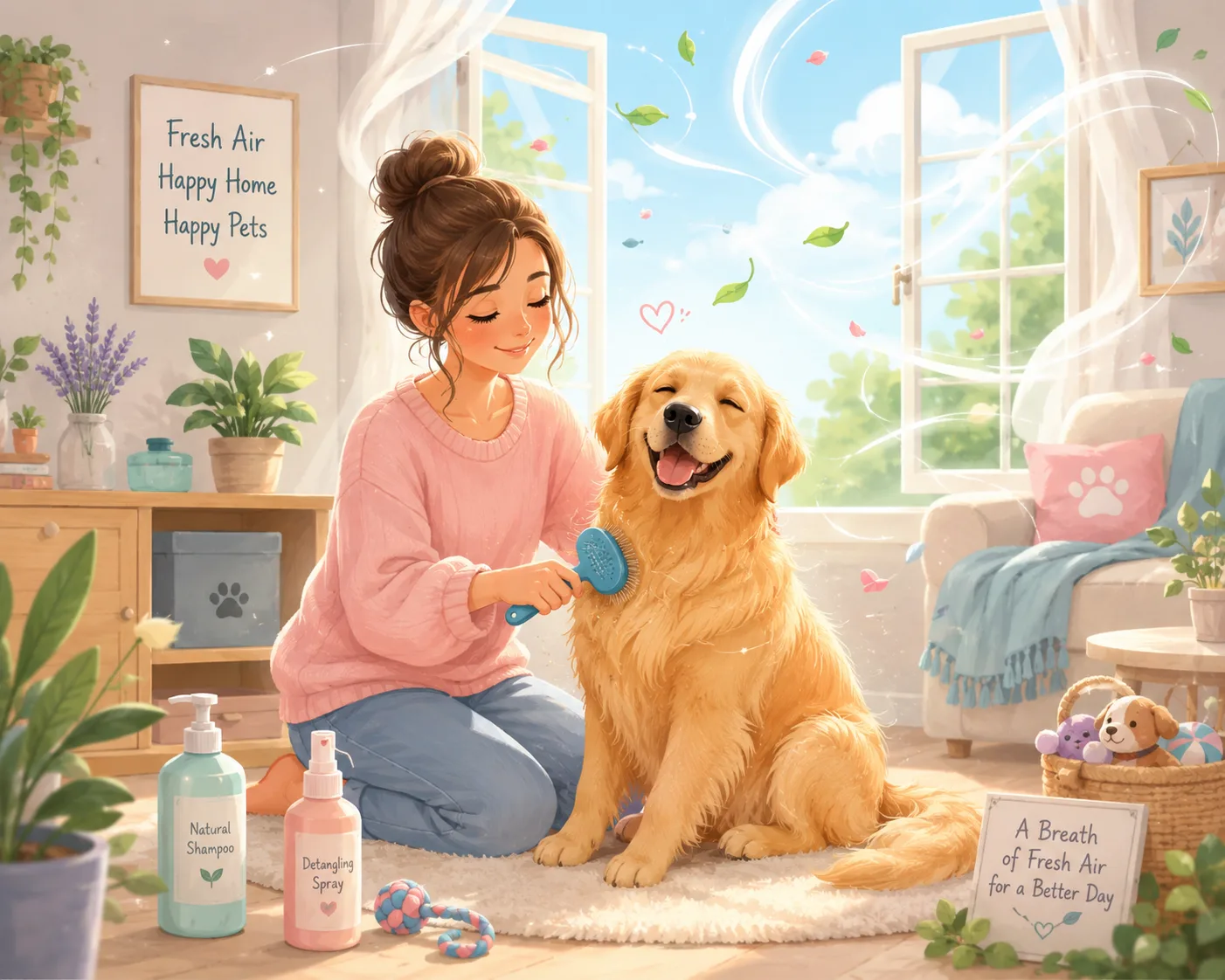
Your dog’s hygiene plays a huge role in how your house smells. Regular bathing helps remove dirt, oils, and bacteria from their coat, while brushing reduces shedding and dander.
Experts recommend brushing frequently; sometimes even daily for long-haired breeds; to minimize the amount of hair and debris that ends up in your home.
Health Factors That Affect Smell
Sometimes, odor isn’t just about cleanliness; it’s about health. Issues like skin infections, ear problems, or dental disease can produce strong smells .
If your dog suddenly smells worse than usual, it might be worth a trip to the vet. Addressing these underlying issues can make a huge difference in your home’s freshness.
Preventing The Smell From Coming Back
Smart Cleaning Habits
Consistency is key. Instead of waiting until the smell becomes noticeable, stay ahead of it with regular cleaning routines.
Vacuum frequently, wash fabrics weekly, and clean up accidents immediately. The longer you wait, the harder it becomes to remove the odor completely.
Odor Prevention Strategies
Simple strategies like using washable covers, placing mats near entrances, and wiping your dog’s paws after walks can reduce the amount of dirt and odor entering your home.
Think of it as damage control; stop the smell before it starts.
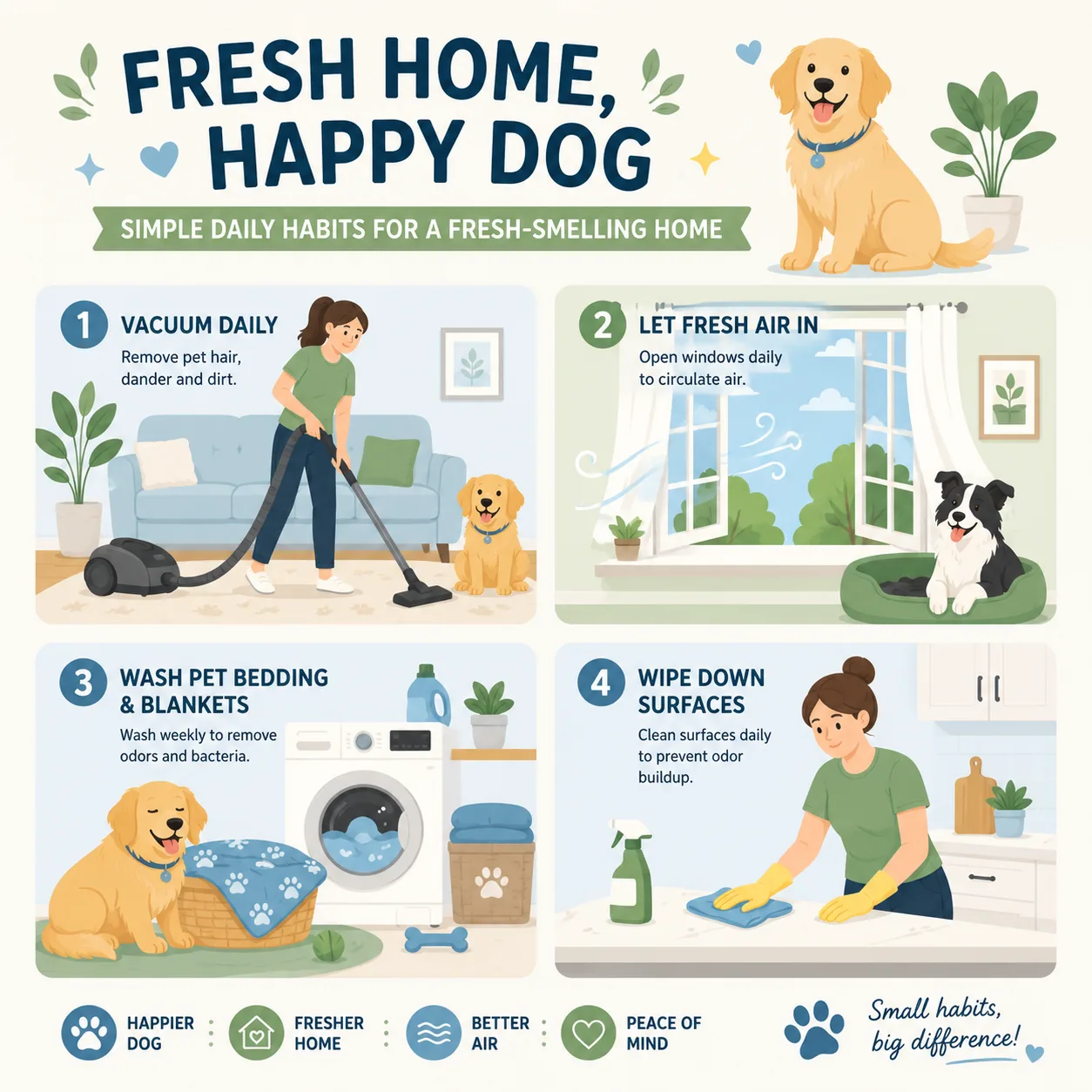
Simple Daily Habits That Make A Difference
Quick Daily Cleaning Routine
You don’t need to spend hours cleaning every day. Small, consistent actions can have a big impact.
Spend a few minutes vacuuming high-traffic areas, wipe down surfaces your dog frequently touches, and check for any accidents that need immediate attention.
Small Changes That Keep Your Home Fresh
Little habits; like opening windows, shaking out blankets, or rotating dog bedding; can keep odors from building up.
It’s not about perfection. It’s about consistency.
Conclusion
Getting rid of dog smell isn’t about masking it; it’s about understanding where it comes from and tackling it at the source. Once you shift your mindset from “covering up” to “eliminating,” everything changes.
By focusing on deep cleaning, proper grooming, and consistent daily habits, you can transform your home into a space that smells fresh; even with a dog living in it. And the best part? You don’t have to sacrifice the joy of having your furry companion around.
Explore Related: Olde English Bulldog And English Bulldog Mix Traits
FAQs
1. How often should I clean to prevent dog smell?
At minimum, vacuum several times a week and wash dog bedding weekly. Consistency is more important than intensity.
2. Do air fresheners help with dog smell?
They only mask the odor temporarily. Real removal requires eliminating the source, usually with enzyme cleaners.
3. Why does my house still smell after cleaning?
Odor-causing compounds may still be trapped in fabrics or deep within surfaces, especially carpets and upholstery.
4. What is the fastest way to remove dog smell?
Use an enzyme cleaner on problem areas, wash fabrics, and improve ventilation immediately.
5. Can dog smell affect home value?
Yes, strong pet odors can deter buyers and even reduce property value, making odor control essential.

Darian Voss is a 29-year-old American content writer based in Boise, Idaho, known for his clear, research-driven approach to digital publishing. With several years of experience crafting engaging articles across lifestyle and pet-focused niches, Darian has built a reputation for delivering trustworthy, reader-friendly content. As a regular contributor to dogcatbirdfish.com, he specializes in simplifying complex topics into practical, easy-to-follow guides that resonate with everyday readers. His writing reflects both analytical thinking and a genuine passion for helping audiences make informed decisions.