

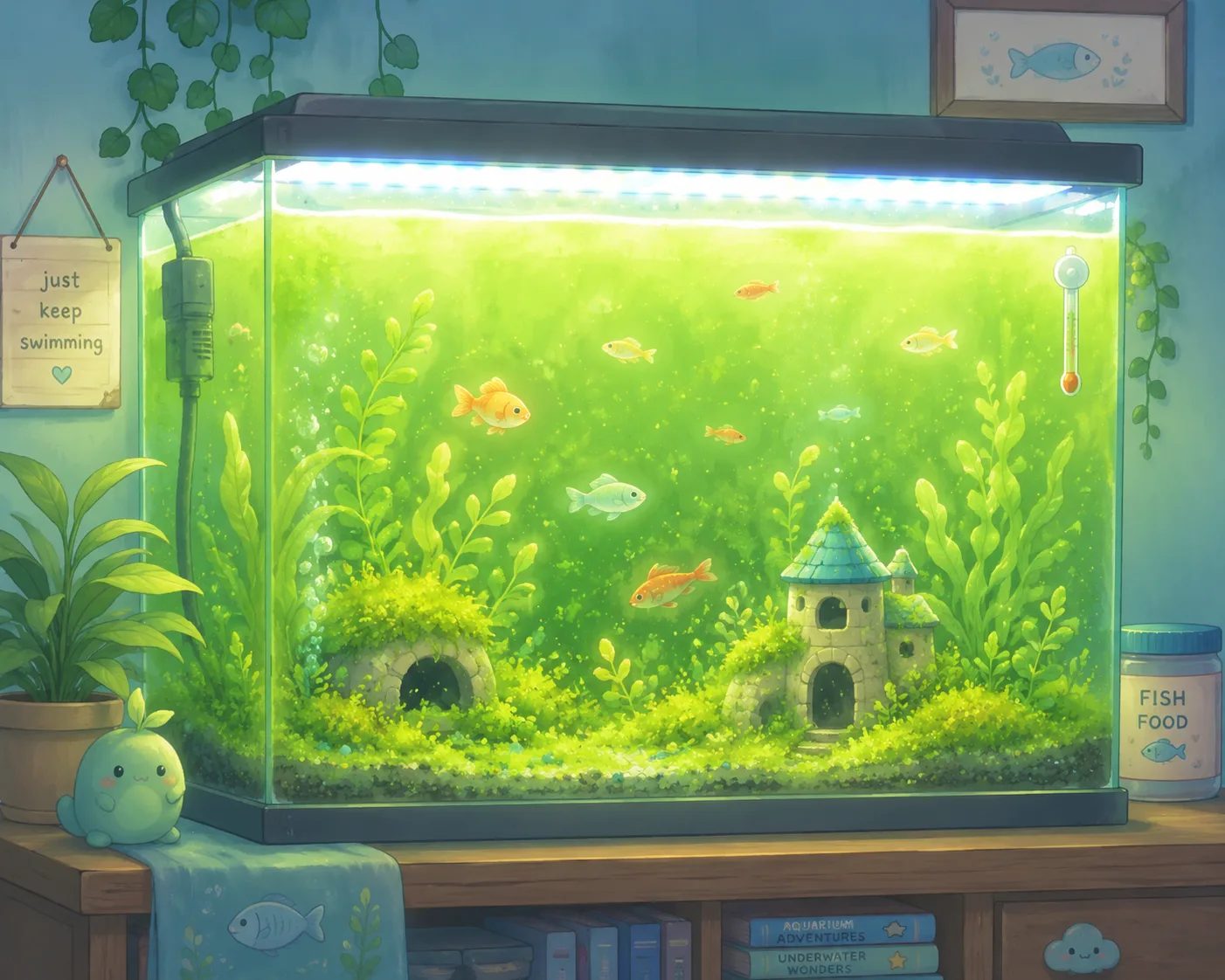
Green water in a fish tank can look alarming the first time you see it. One day your aquarium is clear and beautiful, and the next it resembles pea soup. That murky green haze is usually caused by a bloom of microscopic free-floating algae suspended in the water column rather than algae growing on the glass or decorations. These tiny organisms multiply rapidly when conditions are ideal, especially when light and nutrients are abundant. Aquarium experts consistently identify suspended algae blooms as the primary cause of green water in freshwater tanks.
Many fishkeepers mistake green water for dirty water, but they are not the same thing. Dirt or debris tends to settle or get trapped in the filter, while green water remains cloudy because the algae are alive and circulating throughout the tank. It can appear overnight because algae reproduce quickly under favorable conditions. Think of it like weeds taking over a garden after heavy rain and sunshine. If the tank receives direct sunlight or the aquarium light stays on too long, the algae seize the opportunity and spread fast.
The good news is that green water is usually fixable. It often signals an imbalance rather than a disaster. Your fish may still be okay in the short term, but visibility drops, plant growth can suffer, and water quality may worsen if the root causes remain ignored. Solving the problem means understanding why the algae showed up in the first place instead of only treating the symptom.
What Causes That Cloudy Green Appearance
The cloudy green appearance comes from millions of microscopic algae cells floating in the water. Unlike hair algae or brown film algae that cling to surfaces, these algae stay suspended, which is why the entire aquarium turns green. The stronger the bloom, the more opaque the water becomes. In severe cases, you may barely see fish a few inches from the glass.
Several triggers can start a bloom. The biggest causes are too much light, excess nutrients, and weak filtration balance. Fish waste breaks down into compounds such as nitrates and phosphates, which algae use as food. Uneaten fish food does the same thing. If maintenance has slipped or the tank is overstocked, the nutrient buffet becomes endless. Studies and aquarium care sources repeatedly point to nitrate and phosphate buildup as common algae drivers.
Another common trigger is sudden environmental change. Maybe you deep-cleaned the tank, stirred substrate, changed décor, or moved the aquarium near a bright window. These events can release trapped waste or expose the tank to new light levels. Algae are opportunists. They do not wait politely. They move in fast when balance shifts.
New tanks are also vulnerable because biological filtration is still maturing. Beneficial bacteria may not yet be strong enough to process waste efficiently, allowing nutrients to accumulate. In short, green water often means the tank ecosystem is out of rhythm.
The Role Of Light And Nutrient Imbalance
Imagine algae as tiny solar-powered factories. Give them enough light and enough nutrients, and they run at full speed. That is why light and nutrient imbalance are the two pillars behind most green water outbreaks. One without the other may not cause major trouble, but together they create the perfect storm.
Light can come from aquarium LEDs, room lighting, or direct sunlight from a nearby window. Even a high-quality aquarium light becomes a problem when it runs too long. Many hobbyists leave lights on 10–14 hours a day, thinking fish enjoy it. In reality, most tanks do well with about 6–8 hours depending on plant load and setup. More light means more photosynthesis, and algae are happy to use it.
Nutrients usually come from feeding and waste. Overfeeding is incredibly common. If food reaches the bottom uneaten or fish consume more than needed, leftovers decay and feed algae. Add fish waste, decaying leaves, or clogged filter media, and nutrients rise further. It is like fertilizing a lawn you never intended to grow.
Healthy planted tanks can compete with algae because live plants consume many of the same nutrients. But in tanks with weak plant growth or artificial décor only, algae often face less competition. Balance matters more than any single gadget.
How Excess Light Fuels Algae
Light is energy, and algae thrive on energy. When aquarium lights stay on too long or are too intense, algae can outpace plants and dominate the water column. Tanks placed beside sunny windows often develop recurring green water because sunlight adds hours of extra illumination beyond what the owner realizes. Many hobbyists blame the filter first, when the real culprit is simply too much brightness.
LED lighting has made aquariums more efficient, but it has also made over-lighting easier. Powerful modern fixtures can overwhelm low-tech tanks. If you have a simple community aquarium with no demanding plants, blasting high intensity all day is unnecessary. A timer can be one of the cheapest and smartest algae-control tools you buy.
A stable schedule works better than random on-and-off use. Fish and plants both benefit from consistency. Try 6–8 hours daily, then adjust gradually based on plant health and algae response. Sudden dramatic increases invite trouble. Think of light like seasoning: the right amount enhances everything, too much ruins the meal.
How Overfeeding Raises Nutrients
Overfeeding is the silent algae sponsor in thousands of aquariums. Fish do not need mountains of food. In most community tanks, feeding what fish consume in 30–60 seconds once or twice daily is enough. Yet many owners pour in extra flakes “just in case,” and the leftovers rot unseen between gravel and décor.
As food decomposes, it releases ammonia first, then nitrites, then nitrates as the nitrogen cycle progresses. While nitrates are less toxic than ammonia, they still act as fertilizer for algae. Phosphates from food also contribute significantly. If you repeatedly overfeed, green water can become chronic no matter how many water clarifiers you try.
Cloudy green tanks often improve dramatically when feeding is reduced. This does not mean starving fish. It means feeding intentionally. Observe them eat. Remove leftovers. Skip one fasting day per week for many species if appropriate. Your fish stay healthier, and algae lose their free lunch.
Quick Fixes Vs Long-Term Solutions
When your tank looks like green soup, you naturally want results now. Quick fixes can help, but they work best when paired with long-term correction. If not, the algae often return like weeds after mowing.
| Method | Speed | Best Use | Limits |
|---|---|---|---|
| Blackout | Fast | Light-driven blooms | Temporary if nutrients remain high |
| Water Change | Moderate | Reducing nutrients | Often not enough alone |
| UV Sterilizer | Very Fast | Persistent green water | Costlier equipment |
| Reduced Feeding | Slow-Medium | Nutrient control | Needs consistency |
| Better Filtration | Medium | Ongoing clarity | Requires maintenance |
Quick solutions are emergency brakes. Long-term solutions rebuild balance. Use both together for best results.
Fast Ways To Clear Green Water
Blackout Method
A blackout deprives algae of light. Turn off aquarium lights and block external light for 3–7 days depending on severity. Many aquarium sources report this as an effective short-term response for algae blooms. Keep aeration running because oxygen levels may fluctuate. Fish generally tolerate the darkness well for a short period.
Water Changes
Large but safe water changes help dilute nitrates, phosphates, and suspended algae. Replace 25–50% depending on tank conditions and fish sensitivity. Use dechlorinated water matched for temperature. This is especially useful before and after a blackout.
UV Sterilizers
UV sterilizers are highly effective because free-floating algae pass through the unit and are damaged by ultraviolet light, preventing reproduction. Many hobbyists call this the fastest reliable cure for severe green water. It does not fix overfeeding or poor maintenance, but it can restore visibility quickly.

Why Quick Fixes Sometimes Fail
Quick fixes fail when the root causes stay active. If you blackout the tank but then return to 14-hour lighting, algae can bounce back. If you install UV but continue overfeeding, nutrients remain elevated. If you do giant water changes but never clean the filter or substrate responsibly, waste keeps building.
Aquariums reward consistency more than heroics. One dramatic intervention followed by neglect is like bailing water from a leaking boat without sealing the hole. Sustainable routines matter more than miracle bottles.
How Filtration And Maintenance Affect Clarity
Filtration is the engine room of aquarium clarity. Good filters perform three jobs: mechanical filtration traps particles, biological filtration houses beneficial bacteria, and chemical filtration (optional media like carbon) adsorbs certain impurities. When filters are undersized, clogged, or neglected, waste accumulates and algae gain momentum.
Mechanical media should be rinsed regularly in removed tank water, not chlorinated tap water, to preserve bacteria. Biological media should be disturbed minimally. Replacing all media at once can destabilize the tank and create new problems. Many cloudy-water cases begin after over-cleaning the filter system.
Flow also matters. Dead spots allow debris to collect and nutrients to concentrate. Proper circulation helps move waste toward the intake and distributes oxygen. Even a good filter underperforms if positioned poorly.
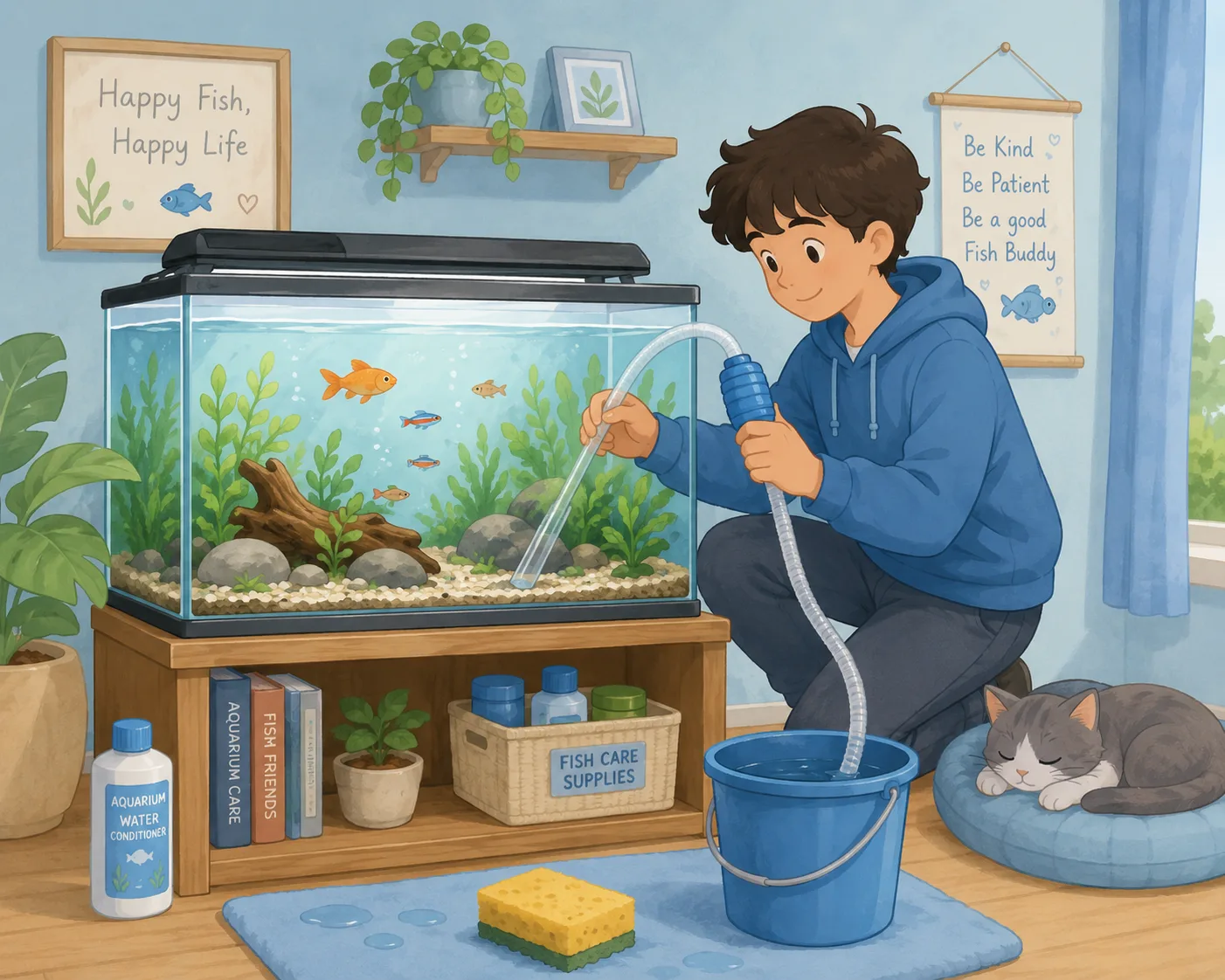
Maintenance should be steady, not extreme. Weekly partial water changes, light gravel vacuuming, glass cleaning, and filter checks usually outperform rare massive cleanouts. Aquariums prefer gentle rhythm over chaos.
Best Maintenance Routine
A practical routine for most freshwater tanks includes:
- Weekly: 20–30% water change, glass wipe, inspect fish behavior.
- Biweekly: Light substrate vacuuming in sections.
- Monthly: Rinse filter sponge/media in tank water.
- Quarterly: Check light schedule, tubing, impeller, and test water chemistry.
This routine keeps waste manageable and prevents nutrient spikes before algae can capitalize.
Preventing Algae From Taking Over Again
Once the water clears, prevention becomes the real win. Start with a timer for lighting. Keep total daily light predictable and moderate. Avoid direct sunlight whenever possible. Even moving the tank a few feet from a bright window can make a surprising difference.
Next, feed with discipline. If fish finish quickly, great. If food drifts untouched, reduce portions. Remove dead leaves, dead fish immediately, and any decaying matter. Organic waste is future algae fuel.
Test water periodically for ammonia, nitrite, nitrate, and where relevant phosphate. Rising nitrate trends often warn you before green water returns. Stable tanks usually tell their story through consistent numbers and active fish.
Live plants can also help by competing with algae for nutrients. Fast growers especially can be useful allies. They are like hiring extra workers to consume the resources algae want.
Keeping Water Clear And Stable
Crystal-clear water is less about luck and more about balance. A stable aquarium has controlled lighting, sensible feeding, mature biological filtration, regular maintenance, and patience. Green water often appears when one or more of those pillars wobble. Restore the pillars, and clarity usually follows.
Do not chase perfection daily. Fish tanks are living systems, not sterile glass boxes. Small fluctuations happen. What matters is trend direction. If the tank improves week by week, you are winning. If problems repeat, revisit the basics instead of buying another shortcut.
Many experienced aquarists learn the same lesson eventually: the best cure is prevention, and the best prevention is routine. Keep things steady, and your tank rewards you with clear water, healthy fish, and a calmer hobby experience.
Latest Articles: How Long Does It Take For Birds Eggs To Hatch
Conclusion
Getting rid of green water in a fish tank starts with recognizing that the cloudy green look is usually a suspended algae bloom caused by excess light and excess nutrients. Quick fixes like blackouts, water changes, and UV sterilizers can clear the water fast, but they work best when paired with long-term habits. Control feeding, improve filtration, maintain a consistent light schedule, and perform regular partial water changes. When your aquarium ecosystem becomes stable, algae lose their advantage. Clear water is not magic; it is balance made visible.
FAQs
1. Is green water harmful to fish?
Usually not immediately, but severe blooms can reduce oxygen swings, block visibility, and indicate poor balance. Long-term neglect can stress fish.
2. How long does it take to clear green water?
With UV sterilizers, sometimes a few days. With blackout and maintenance corrections, often several days to two weeks depending on severity.
3. Should I completely clean my tank to fix green water?
No. Full tear-down cleaning often disrupts beneficial bacteria and may worsen instability. Partial cleaning is usually better.
4. Can live plants stop green water?
They can help significantly by competing for nutrients, especially fast-growing species, but they are not an instant cure alone.
5. Why does green water keep coming back?
Recurring blooms usually mean the root cause remains: too much light, overfeeding, weak maintenance, poor filtration, or excess nutrients.

Darian Voss is a 29-year-old American content writer based in Boise, Idaho, known for his clear, research-driven approach to digital publishing. With several years of experience crafting engaging articles across lifestyle and pet-focused niches, Darian has built a reputation for delivering trustworthy, reader-friendly content. As a regular contributor to dogcatbirdfish.com, he specializes in simplifying complex topics into practical, easy-to-follow guides that resonate with everyday readers. His writing reflects both analytical thinking and a genuine passion for helping audiences make informed decisions.